
Loading...
Serving Ontario, CA and surrounding areas. (909) 738-1084
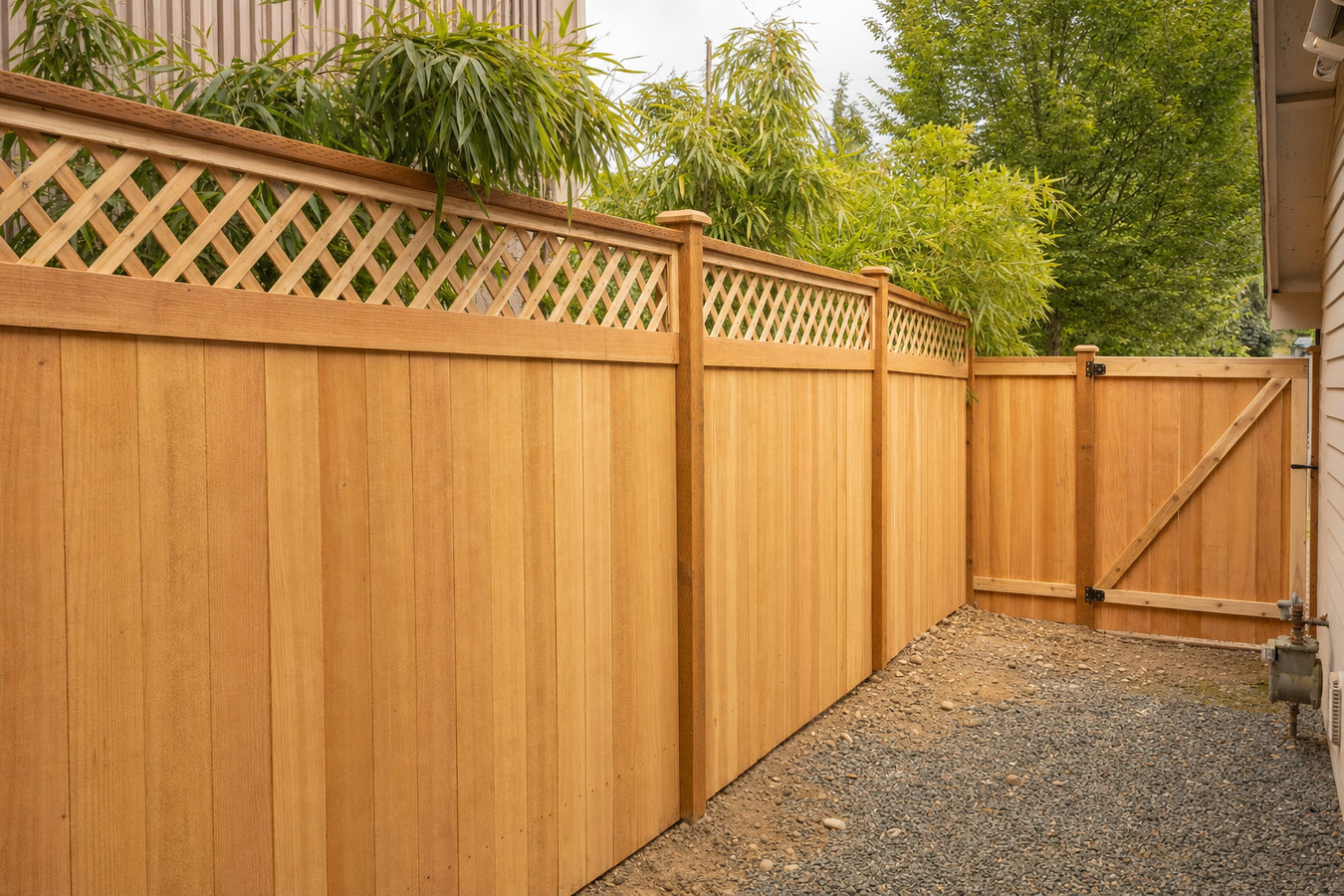
A properly built wood privacy fence gives your Ontario backyard definition and warmth that no other material matches. We use lumber selected for the Inland Empire's climate, post footings sized for local clay soil, and handle permits and HOA approvals as part of every job.
Wood privacy fence installation in Ontario, CA means selecting the right lumber species for local climate conditions, setting posts in concrete footings designed for clay soil, and completing installation in two to four days once the city permit is in hand.
Wood fencing has a warmth and character that vinyl and metal do not replicate. The natural grain, the way the color deepens over time with proper sealing, the craftsmanship visible in a well-built board-on-board fence - these are real reasons homeowners choose wood even knowing it takes more maintenance. The honest trade-off is that Ontario's climate is harder on wood than milder parts of California. The heat dries boards out, UV exposure fades untreated surfaces, and the occasional rain cycle adds moisture stress. A wood fence installed with the right species and proper finishing care holds up well here - it just requires that maintenance commitment.
If you are weighing wood against a lower-maintenance option, our vinyl fence installation service covers the alternative side-by-side. For homeowners who want to enclose the patio as well as the yard, our screened-in porches and screened decks service is a natural complement that adds bug and sun protection to the outdoor living area.
Individual board repairs extend the life of a fence for a year or two, but once multiple sections are rotting or warping it signals the underlying structure is compromised. In Ontario's climate, the cycle accelerates - once moisture gets behind unsealed boards, it spreads faster than most homeowners expect. Replacement at that point is more cost-effective than continued repair.
A leaning fence almost always means post failure - either the post itself has rotted at the base, or the original footings were not deep enough for Ontario's clay soil and have been pushed by seasonal ground movement. This is a structural issue, not a cosmetic one. Straightening a leaning post without addressing the footing is a short-term fix that rarely holds.
Subterranean termites are common throughout San Bernardino County, and wood fencing is a frequent entry point. A fence that shows signs of termite damage should be inspected by a licensed pest control professional before you replace it - both to confirm the extent of the damage and to treat the soil before new posts go in.
If you are adding a pool, expanding a patio, installing a pergola, or doing anything that increases how much time you spend in the backyard, a solid privacy fence often becomes a priority. It completes the backyard as a usable space and adds a finished look that landscaping alone does not fully replace.
Every job starts with a site visit to measure the fence line, flag any boundary or slope considerations, and discuss species, style, and height options. We use cedar or pressure-treated lumber selected for Ontario's climate - not the cheapest material at the lumber yard, but wood that has proven to hold up here over multiple seasons. Post footings are dug to a depth and poured at a footing size appropriate for local clay soil, which tends to require more concrete than national installation guides suggest.
We handle city permit applications and HOA coordination as part of every installation - not as an extra step you manage on your own. If you are comparing wood against a vinyl alternative, our vinyl fence installation service gives you the full picture before you commit.
Boards set flush with no gaps - the standard choice for homeowners who want a full visual barrier in the backyard, around a pool, or adjacent to a busy street or alley.
Overlapping boards that provide solid privacy from straight-on views while allowing some air circulation - popular in Ontario because it handles wind load better than a flat solid panel.
Finished top details that give the fence a more polished look and protect cut end grain from moisture exposure - a detail that improves both appearance and longevity.
For homeowners replacing an existing fence - we demo and haul away the old materials on the first day so the site is clear when post setting begins.
Ontario sits in the heart of the Inland Empire, where summer temperatures regularly exceed 100 degrees and the UV index is among the highest in Southern California. That environment dries wood faster, fades unsealed surfaces more aggressively, and creates more thermal cycling stress than most wood fence guidance accounts for. The right species choice and a proper sealing plan at installation are not optional extras here - they are what separate a fence that looks good at year five from one that has visibly weathered by year two. Homeowners in nearby Chino and Upland face the same climate demands, and we bring that same local knowledge to every installation across the region.
Ontario's clay soil is the other local factor that requires specific attention. Clay soil swells with moisture and shrinks in dry conditions, and that seasonal cycling can slowly push wooden posts out of plumb if the footings are not sized to resist it. The City of Ontario's permitting process adds another layer - building permits are required for most residential fence installations above a certain height, and working with that process, rather than around it, is important for your home's resale record. We are familiar with the Ontario Building and Safety Division permit workflow, HOA submission requirements across the city's many planned communities, and the soil conditions that make post footing depth a decision worth getting right. California Contractors State License Board licensing requirements apply to every fence installation we do.
We respond within one business day. The site visit covers fence line measurement, species options, style choices, and any relevant HOA guidelines - no obligation and no pressure to decide on the spot.
Once you sign, we submit the City of Ontario building permit application right away. Approval typically takes one to two weeks. We schedule your installation start date around that window - permit in hand before any digging begins.
Posts are dug and set in concrete on day one. Once footings have cured, rails are attached and boards are fastened individually - the detail work that gives a wood fence its character. Most residential yards are done in two to four days of on-site work.
We walk the fence line with you to confirm posts are plumb, boards are even, and any gates function properly. We schedule the city inspector sign-off as part of closing the permit - your fence is fully documented and legally compliant from day one.
Free estimate, no obligation. We pull the permit and handle HOA approvals so you do not have to navigate city hall on your own.
(909) 738-1084We use Western red cedar and properly graded pressure-treated lumber - not whatever is cheapest at the moment. In Ontario's heat and UV environment, species choice is a real factor in how long your fence holds up and how much maintenance it needs. We can walk you through the trade-offs for your specific yard and budget before you commit to anything.
We account for seasonal soil movement in how we size post holes and pour concrete footings. It is not visible when the job is done, but it is what keeps your fence plumb in year five when a fence installed with generic footing specs has started to lean. Ask any contractor you compare us to how they handle clay soil - the answer is revealing.
We file the City of Ontario building permit and help prepare HOA documentation as a standard part of every installation. You do not have to manage these processes yourself or wonder whether they were done correctly. A permitted and HOA-approved fence protects your home's value and eliminates the compliance risk of a fence installed without documentation.
Every estimate breaks out lumber, hardware, labor, and the permit fee separately. What is in the written quote is what you pay - no additional charges on installation day, no pressure to upgrade once work has started. American Fence Association installation standards guide every job we do.
We have worked on wood fences across Ontario and the Inland Empire - in HOA communities, on sloped lots, and in neighborhoods where the city permit process has specific requirements. That local track record is what makes the difference between a fence that holds up and one that starts showing problems before the first anniversary.
Low-maintenance vinyl fencing for homeowners who want the privacy and definition of a solid fence without the ongoing maintenance that wood requires.
Learn MoreCovered patio structures that pair naturally with a new fence - completing your backyard as a finished, functional outdoor living space.
Learn MorePermit season books up quickly in the Inland Empire - reach out now so we can lock in your start date before the summer backlog.