
Loading...
Serving Ontario, CA and surrounding areas. (909) 738-1084
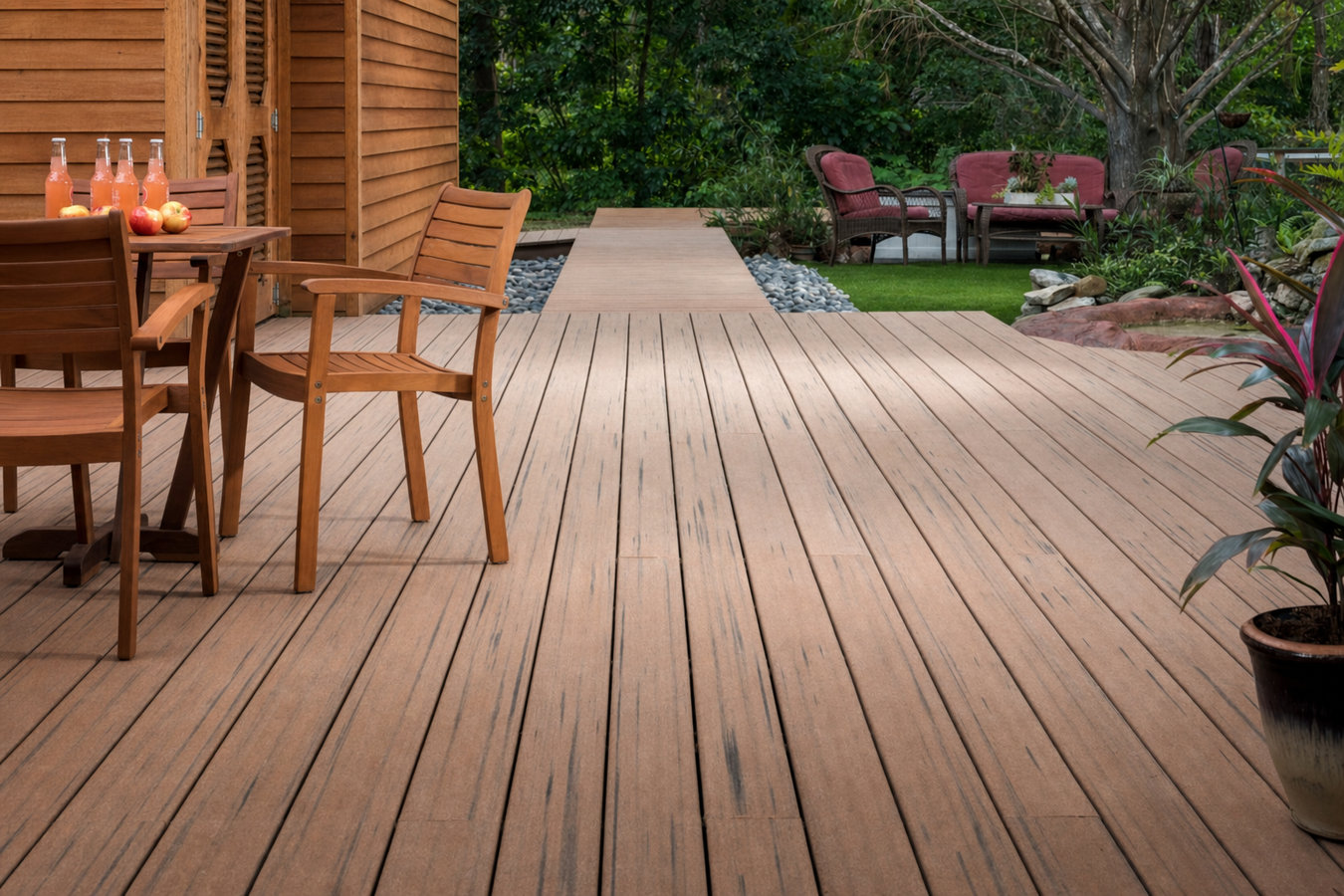
Tired of sanding, sealing, and replacing boards every year? Composite decking handles Ontario's heat and UV without the annual upkeep that wood demands - and it looks just as good a decade from now.
Composite deck installation in Ontario, CA replaces traditional wood with boards made from wood fiber and recycled plastic - built to resist fading, splintering, and the sustained heat that makes wood decks deteriorate faster here than in cooler climates, with most quality products lasting 25 to 30 years.
For Ontario homeowners, the appeal is practical. The Inland Empire's 100-plus-degree summers are hard on wood - boards that are not sealed every year start cracking and graying faster than most people expect. Composite sidesteps that maintenance cycle almost entirely. A periodic wash with soap and water is generally all it needs. If you are comparing options and want to understand the full range of what we build, our custom deck design and build page covers the whole process from site visit through permit and completion.
Every composite deck we build in Ontario is permitted through the city, engineered to handle local soil conditions, and installed with the framing quality that keeps the structure solid for decades - not just good-looking on day one.
If the surface is rough enough to snag bare feet, or boards flex when you walk on them, your wood deck has likely started to break down from the inside. In Ontario's intense sun and heat, wood decks that are not sealed every one to two years deteriorate faster than they would in a milder climate. At that point, replacement with composite is often more cost-effective than repeated repairs.
If deck upkeep has become a recurring annual cost - renting a sander, buying stain, replacing a few boards - you are on a treadmill that composite decking gets you off of. Most homeowners who switch to composite find the ongoing cost drops to almost nothing beyond an occasional wash. If you have done two or more rounds of significant wood deck maintenance, the math on switching usually starts to make sense.
If a home inspector or city inspector has noted structural concerns - loose posts, deteriorated connections, or inadequate footings - those are not cosmetic issues you can patch over. In Ontario, an unpermitted or structurally deficient deck can delay or derail a home sale. Replacing it with a properly permitted composite deck resolves the issue cleanly and adds documented value to the property.
If your current deck becomes too hot to use comfortably from June through September, that is a quality-of-life problem specific to the Inland Empire's climate. Newer composite products with heat-reflective surfaces stay meaningfully cooler than older materials. If the heat is keeping you off your own deck during the best outdoor months, it is worth exploring whether a replacement would give you the space back.
Every composite deck we install starts with a proper structural frame - pressure-treated lumber set on concrete footings anchored deep enough to handle Ontario's clay soils. The composite boards go on top of that frame using either visible screws or hidden fasteners, depending on the look you prefer. We work with leading composite brands and walk you through color and texture options before anything is ordered. If a newer heat-reflective board option is available for your project, we will show you how it compares - this matters more in the Inland Empire than in cooler markets.
If you want something beyond a standard deck surface, we also install deck railing systems - composite, cable, or aluminum - as part of the same project. For homeowners comparing decking materials before committing, we can also walk you through Trex deck installation, which is one of the most widely recognized composite brands and a common choice in this market.
Best for homeowners replacing an existing wood deck who want to eliminate annual maintenance and get a longer-lasting surface without changing the deck's footprint.
For homeowners starting from scratch - no existing deck - who want to skip wood altogether and build the right surface from day one.
Combines composite decking with a matching or contrasting railing system - cable, composite, or aluminum - for a finished look that holds up without painting or staining.
Lighter-colored boards with heat-reflective technology - a practical upgrade for Ontario homeowners who want the deck to be usable barefoot on summer afternoons.
Ontario's climate is one of the strongest arguments for composite over wood. The city sits in the Inland Empire, where summer temperatures regularly exceed 100 degrees and the UV load is intense enough to fade and dry out materials much faster than in a coastal city. That gap in performance is not theoretical - Ontario homeowners with wood decks see it every few years when they start budgeting for sand-and-seal projects or replacing boards that cracked over a hot summer. Composite eliminates most of that cycle. The framing underneath still needs to be built correctly, but the surface itself holds its color and texture for decades in conditions that would wear out wood in half the time.
The city's permit process adds another reason to choose a contractor with local experience. The City of Ontario Building and Safety Division inspects both the framing and the finished deck - meaning the structural work is verified by a city official, not just signed off on by your contractor. Homeowners in Fontana and Chino face the same climate and permit landscape, and we bring the same local knowledge to every project in the region.
We schedule a time to visit your yard - not just give you a number over the phone. We respond within one business day. During the visit, we measure the space, discuss your goals and budget, and walk you through composite material options. You leave the conversation with a clear sense of what the project will cost.
Once you sign a contract, we submit plans to the City of Ontario. If your neighborhood has an HOA, that approval runs at the same time. This stage typically takes two to four weeks. We handle all the paperwork - you should not need to make calls or chase anything yourself.
The crew digs and pours concrete footings, then builds the structural frame. A city inspector verifies the framing before the composite boards go on. This is the most critical phase - it is what determines whether the deck is solid and safe for the long term. Most homeowners find this reassuring rather than inconvenient.
With the frame approved, composite boards go down quickly. Railings, stairs, and any built-in features follow. The city inspector returns for a final check. Once that passes, we do a full cleanup and walk you through the finished deck - including how to care for it and any warranty documents for the materials used.
We come to you, measure the space, and give you a written quote with the full scope and materials spelled out. No vague estimates, no obligation - just a real number based on your actual yard.
(909) 738-1084We select composite products that hold up in Ontario's sustained summer heat, including lighter and heat-reflective board options that stay comfortable underfoot on 100-degree afternoons. That is a specific product knowledge question that matters here more than in most other markets.
We handle the full City of Ontario permit process and, if your neighborhood has an HOA, we manage that submission at the same time. Your deck shows up clean on property records and will not create a last-minute obstacle when you sell your home.
Ontario's expansive clay soils shift seasonally. We design and place footings to reach stable ground, so the deck stays level over years - not just on move-in day. The city inspection before the concrete is poured confirms this, not just our word.
Every contractor in California who builds decks must hold an active license from the California Contractors State License Board. You can verify our license in about 30 seconds before signing anything - and we encourage you to do so with any contractor you consider.
The combination of local material knowledge, permit experience, and structural quality is what separates a composite deck that still looks sharp after ten Ontario summers from one that fades and sags before you get your money's worth.
For additional guidance on composite decking maintenance and care, the North American Deck and Railing Association publishes consumer resources on deck construction and upkeep.
Trex is one of the most widely recognized composite brands - if you have seen it mentioned and want to know how it compares to other options for Ontario's climate, start here.
Learn MoreA composite deck surface pairs well with a matching railing system - cable, composite, or aluminum - installed at the same time for a finished, code-compliant result.
Learn MoreSpring and fall are our busiest seasons in the Inland Empire. If you are planning a composite deck for this year, contact us now so we can get your project on the calendar before the wait grows.